Little is known about the city of Piazza before its destruction by the Norman king William I of Hauteville in 1161. However, the city’s history is enriched by information from recent archaeological excavations in the Casale district, which helps us understand how it is truly based not only on historical and literary sources, but also on the evidence emerging from underground.
We know of descriptions from this period (1140), when Roger II of Hauteville was king of Sicily, by the Arab geographer and botanist Al Idrisi, who narrated that Iblatâsah was a well-fortified fortress, on which a vast county with blessed sowing lands depended. Its market was famous, with abundant foodstuffs, trees and fruit.
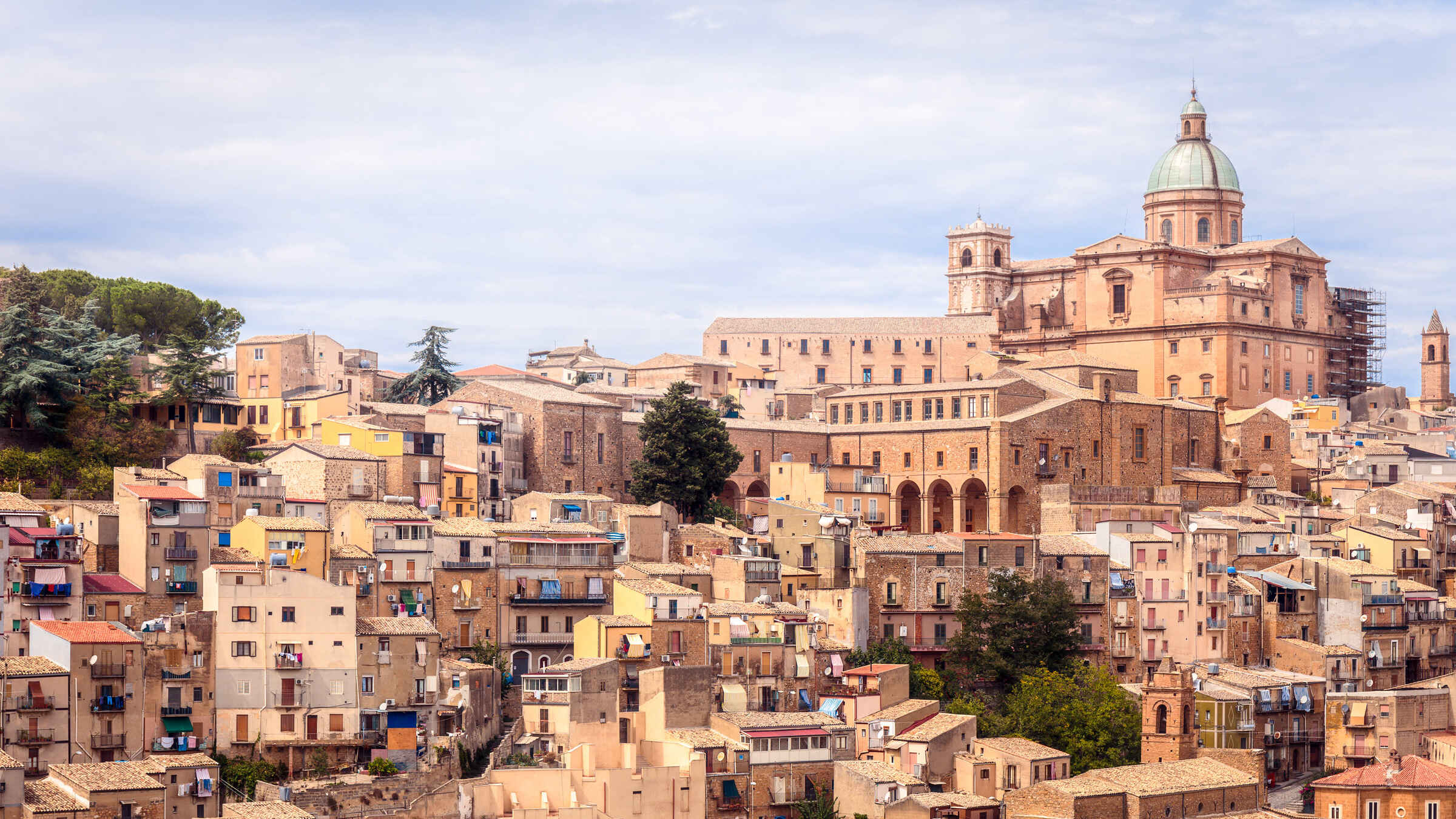
According to this description, Piazza was not yet a city, but a fortress that controlled a vast territory, inhabited by a warlike and proud people who were part of the great Aleramic fiefdom, along with Butera and Paternò. This partly explains the anti-Saracen policy that would align Piazza with Ruggero Sclavo’s baronial rebellion against William I, leading to its ruin.
The history of Piazza after its reconstruction continues to be linked to the history of the Norman kingdom. Upon the death of William I, his son Roger should have succeeded him, but he died under unclear circumstances during an uprising in 1160, and his younger son William, just 13 years old, was unable to do so independently. Queen Margaret, a Navarrese princess of Norman origin, assumed the regency for five years. She governed during a period marked by constant disputes within the aristocracy, which was kept distant from central power.
The Swabian period began in 1194 with Henry VI, continued with Frederick II from 1198 to 1250, and concluded in 1266 with Manfred. At that time, Piazza was, after Palermo and Messina, one of the three most important cities in the kingdom. The church of the priory of Sant’Andrea, the church of the Patrisanto on the façade overlooking the square, the Commenda of the Knights of San Giovanni, and the church of San Martino on the side portals belong to this period. Frederick II confirmed Piazza as a “state city” and, in 1234, made it the seat of the “General Curia of Sicily,” to which the island’s citizens could appeal against state officials. Furthermore, in 1240, the sovereign invited Piazza to the Parliament of Foggia, among the eleven state cities of Sicily.